Browse Our Books
You can browse our books easily with any of the following filters, hover over the filters or their titles to see their descriptions.
Reading Level
Categories
Or you can use quick search or switch to advanced search for better results...
Search Results (Found 8189 results)
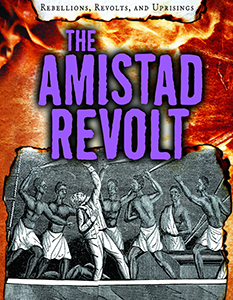
Rebellions, Revolts, and Uprisings
Rebellions have undeniably played a large part in the evolution of the United States. Many were unsuccessful at the time, but had lasting ramifications that led to great social and political change, such as John Brown's raid on the Harpers Ferry arsenal in 1859. Each comprehensive volume in this must-read series presents the circumstances that led to an uprising, key players involved, essential events that led to its success or failure, and its impact on American history.
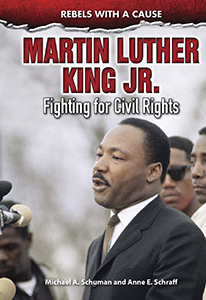
Rebels with a Cause
This captivating series will introduce readers to a group of rebels whose contributions to the politics, civil and human rights, arts, music and athletics came with a social message that helped shape society and change the world. Engrossing narrative text examines each rebel in depth, including his or her education, life experiences, personality, and developing social conscience; formative events that inspired a sense of justice, outrage or mission; and how he or she used the stage afforded by politics, the media, and the entertainment industry to share an important social message with admirers across the globe.
Recentering the Universe: The Radical Theories of Copernicus, Kepler, Galileo, and Newton
For more than a 1,000 years, the Earth was at the centre of the universe, according to established scientific thinking and teachings of the Catholic Church. Defiance of Church doctrine could mean death, so no one dared dispute this long-accepted idea. In the 1500s & 1600s, men like Nicolaus Copernicus, Johanned Kepler, Galileo Glilei, and Isaac Newton began to ask questions. What if Earth actually orbited the sun, instead of the other way around? What if the universe was much bigger than anyone imagined? These scientists risked their reputations-even their lives-to challenge the very heart of Catholic dogma and scientific tradition. Yet, in less than 200 years, their radical thinking overturned theories that had lasted more than a millennium.
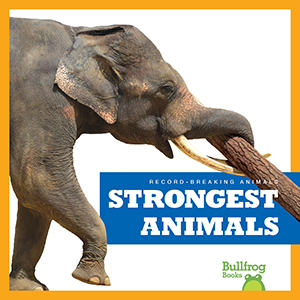
Record-Breaking Animals (Bullfrog Books) 
Record-Breaking Animals introduces beginning readers to the biggest, smallest, fastest, slowest, smartest, and strongest creatures in the animal kingdom. Learn about the impressive feats of a wide variety of animals.

Recycle, Reduce, Reuse, Rethink 
All around the world people are finding ways to conserve resources, reduce pollution and protect the environment. Learn how a variety of materials are recycled, as well as what governments, industries, communities, and individualsare doing to help the planet. Most Importantly what can you do to recycle, Reduce, reuse, and rethink products and resources.

Recycling (Macmillan Young Library)
The Recycling series will empower young students, teaching them how to save natural resources and keep the environment healthy.
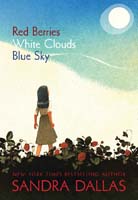
Red Berries, White Clouds, Blue Sky
It's 1942: Tomi Itano, 12, is a second-generation Japanese American who lives in California with her family on their strawberry farm. Although her parents came from Japan and her grandparents still live there, Tomi considers herself an American. She doesn't speak Japanese and has never been to Japan. But after the Japanese attack on Pearl Harbor, things change. No Japs Allowed signs hang in store windows and Tomi's family is ostracized. Things get much worse. Suspected as a spy, Tomi's father is taken away. The rest of the Itano family is sent to an internment camp in Colorado. Many other Japanese American families face a similar fate. Tomi becomes bitter, wondering how her country could treat her and her family like the enemy. Sandra Dallas shines a light on a dark period of American history in this story of a young Japanese American girl caught up in the prejudices and World War II.
Red Bird Sings
This is a picture book biography of Zitkala-èa, born Gertrude Simmons Bonnin, a Native American woman at the turn of the nineteenth century. Zitkala-èa was a writer, editor, musician, teacher, and political activist in a time when even basic education was uncommon among Native Americans.
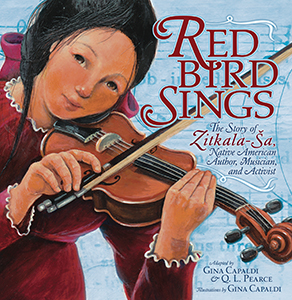
Red Bird Sings: The Story of Zitkala-èa, Native American Author, Musician, and Activist
I remember the day I lost my spirit." So begins the story of Gertrude Simmons, also known as Zitkala-èa, which means Red Bird. Born in 1876 on the Yankton Sioux reservation in South Dakota, Zitkala-èa willingly left her home at age eight to go to a boarding school in Indiana. But she soon found herself caught between two worlds-white and Native American. At school she missed her mother and her traditional life, but Zitkala-èa found joy in music classes. "My wounded spirit soared like a bird as I practiced the piano and violin," she wrote. Her talent grew, and when she graduated, she became a music teacher, composer, and performer. Zitkala-èa found she could also "sing" to help her people by writing stories and giving speeches. As an adult, she worked as an activist for Native American rights, seeking to build a bridge between cultures.The coauthors tell Zitkala-èa's life by weaving together pieces from her own stories. The artist's acrylic illustrations and collages
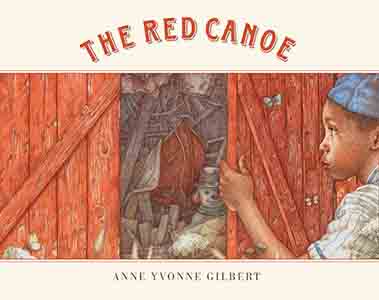
Red Canoe, The
As an abandoned canoe reminisces about bygone adventures with its beloved boy, are the best days behind it-or is there a glimmer of new life just ahead?